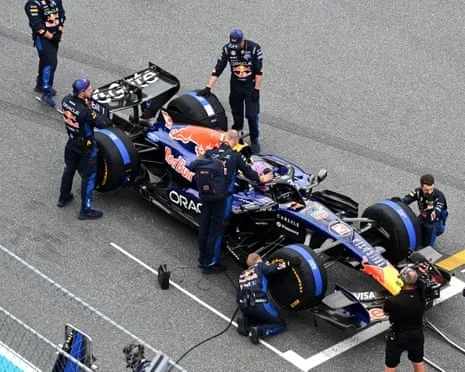
Formula One has agreed to modify engine designs for the 2027 season, responding to widespread discontent from leading drivers over how the current-generation power units have impacted racing dynamics.
During a meeting on Friday, the FIA, F1, teams, and engine manufacturers reached a preliminary agreement—subject to formal approval—to accelerate regulatory changes, allowing redesigned engines to debut next year.
The core aim is to reduce the energy management burden on drivers each lap. The current engines operate at nearly a 50-50 split between the internal combustion engine (ICE) and electrical energy. This balance has led to counterintuitive driving strategies, frequent position swaps that frustrate drivers, and safety concerns due to closing speeds.
From 2027, the split will shift closer to 60-40 in favor of ICE, achieved by increasing fuel flow to the combustion engine while cutting hybrid unit power output from 350kW to 300kW.
This change is expected to let drivers push their cars flat-out without constantly focusing on harvesting electrical energy. They would be able to attack corners aggressively without being penalized on the subsequent straight due to insufficient energy recovered through corners, and they would no longer need to recover energy while on full throttle or lift and coast.
Red Bull’s Max Verstappen has been an outspoken critic, calling the biggest regulation overhaul in a generation “Formula E on steroids” and even questioning his future in the sport. He was far from alone in his discontent.
After the last round in Miami, where minor tweaks were made to mitigate energy management issues, defending world champion Lando Norris acknowledged the improvement but called it “not to the level that Formula One should still be at yet.”
Because the 2027 engines will require additional work—and chassis modifications to accommodate larger fuel tanks—all stakeholders had to move quickly. The changes will now be evaluated in detail before submission for formal approval from the F1 Commission, the Power Unit Advisory Committee, and the FIA’s World Motor Sport Council.